 Reviews



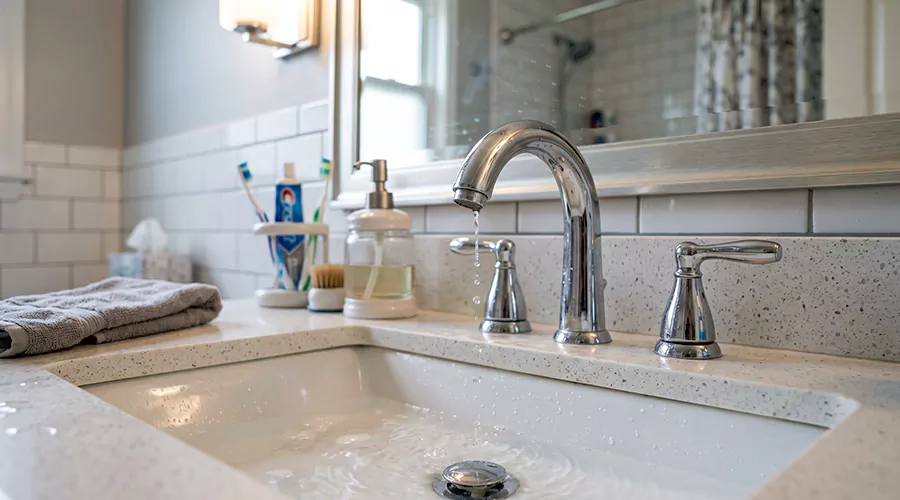
A bathroom faucet usually leaks because its internal cartridge or another sealing component has worn out. A persistent drip from the spout often indicates an internal valve problem. Water around the handle or faucet base may have a different source. Professional bathroom sink faucet repair costs approximately 60–200 in the United States according to July 2026 pricing data. The first step is to identify exactly where the water appears. This is particularly important for bathroom faucets with separate handles because different internal components may control the hot-water and cold-water supplies.
What Are the Most Common Causes of Bathroom Faucet Leaks?
Bathroom faucet leaks usually involve internal sealing components or connections. Regular operation gradually wears these parts. Mineral deposits can also affect the movement of the valve and interfere with normal sealing.
Common causes include:
- Worn cartridges: Internal sealing surfaces no longer close completely.
- Damaged O-rings: Water escapes around the spout or other sealed components.
- Worn washers: Certain faucet designs use washers that deteriorate over time.
- Damaged valve seats: Rough surfaces interfere with the shutoff seal.
- Loose connections: Water escapes from an accessible supply fitting.
- Mineral deposits: Accumulated scale interferes with internal component movement.
- Installation problems: Incorrectly seated components create leaks around connection points.
The faucet's construction determines which components are present. A cartridge-based model requires a different repair approach from a traditional compression-style faucet.
What Does the Leak Location Tell You?
Bathroom faucet leaks can appear in several locations. Identifying where the first drop forms helps narrow the possible cause before removing any components.
| Leak Location | Possible Cause | First Diagnostic Step |
|---|---|---|
| End of spout | Internal cartridge or washer | Observe after shutoff |
| Around handle | Cartridge seal or related component | Test while faucet runs |
| Around spout base | O-ring or internal seal | Dry and inspect |
| Beneath sink | Supply hose or faucet connection | Inspect under-sink plumbing |
| Around countertop mounting | Water entering around faucet base | Trace moisture from above |
| Under one handle | Hot-side or cold-side component | Identify the affected side |
Moen's bathroom faucet troubleshooting guidance identifies cartridges as a typical cause of spout dripping and handle leaks in its cartridge-based designs. The same symptom does not establish the same failed part across every manufacturer.
Why Does My Bathroom Faucet Drip After I Turn It Off?
A faucet that continues dripping after shutoff may have an internal sealing component that no longer closes completely. The cartridge controls after flow in many modern bathroom faucets. When its seals become damaged, a small amount of water can continue passing through the spout. For compression-style faucets, the problem may involve the washer or valve seat.
Observe whether the drip continues for several minutes. A small amount of water remaining inside the spout can sometimes drain immediately after shutoff without indicating an ongoing valve leak. Persistent dripping suggests that the faucet is still allowing water to pass through.
Why Does Water Leak Around the Bathroom Faucet Handle?
Water around the handle usually indicates that moisture is escaping from a sealing component near the valve mechanism. The exact cause depends on the faucet design. For cartridge-based Moen bathroom faucets, the manufacturer identifies a worn cartridge as a typical cause of handle-area leaks. Before removing the handle, confirm that the water actually begins there.
A simple test involves:
- Dry the entire faucet.
- Wrap a paper towel loosely around the handle area.
- Turn on the faucet.
- Observe whether the towel becomes wet.
- Check the surrounding faucet base.
- Turn off the faucet.
- Observe whether moisture continues forming.
Do not force the handle tighter to stop water escaping from a failed internal seal.
Why Is Water Collecting Around the Faucet Base?
Water collecting around the base can originate from the faucet's internal components or from water entering around the mounting area. A handle leak can also travel downward and make the base appear to be the source. Therefore, begin by checking the handle area. Moen recommends using a paper towel to distinguish a handle leak from a leak that genuinely originates around the faucet base.
For certain models, the manufacturer also recommends checking the aerator before moving to cartridge or O-ring replacement. The appropriate repair depends on whether the faucet uses a single-handle mechanism or separate handle assemblies.
Can a Two-Handle Bathroom Faucet Leak From Only One Side?
Yes. A two-handle bathroom faucet may have separate internal components controlling hot and cold water. Wear in one handle assembly can cause dripping even when the other side continues functioning normally. The affected side can sometimes be identified by isolating its supply valve. However, do not force old shutoff valves or attempt disassembly while the faucet remains pressurized.
Some Delta two-handle designs use replaceable seats and springs. The manufacturer's instructions describe replacing those components when normal wear causes dripping. Other models use cartridges instead. Identify the manufacturer before purchasing replacement parts.
Can Hard Water Damage Bathroom Faucet Components?
Mineral deposits can accumulate around bathroom faucet components and interfere with their operation. Over time, scale can contribute to stiff movement and reduced water flow.
A faucet exposed to heavy mineral buildup may show several symptoms:
- White deposits around the spout.
- Reduced flow through the aerator.
- A handle that becomes difficult to move.
- Uneven water distribution.
- Persistent scaling around accessible components.
Cleaning the exterior and removable aerator may improve water flow. However, cleaning an aerator will not correct an internally damaged cartridge. Use cleaning methods compatible with the faucet's finish and follow the manufacturer's maintenance instructions.
What Warning Signs Suggest the Bathroom Faucet Needs Repair?
A bathroom faucet can develop several symptoms as internal components wear. Some involve only dripping, while others indicate that the problem may be affecting additional parts.
Watch for these warning signs:
- The spout continues dripping several minutes after shutoff.
- The handle becomes unusually stiff.
- Water forms around the handle during use.
- Moisture accumulates around the base.
- The faucet requires more force to close.
- Mineral deposits appear around sealing areas.
- The drip rate gradually increases.
- Water appears beneath the bathroom sink.
- A previous repair no longer stops the leak.
- The faucet develops a continuous trickle.
Moisture beneath the sink requires particular attention because it can damage the surrounding cabinet. A persistent spout drip can also waste substantial amounts of water over time.
How Can You Identify the Leak With a DIY Test?
A staged inspection can help distinguish an internal faucet leak from moisture entering around the base or connections. The test requires no initial disassembly.
Follow these steps:
- Dry the entire faucet.
- Dry the surrounding sink surface.
- Check beneath the sink for existing moisture.
- Turn on the cold-water side.
- Observe the handle and base.
- Repeat with the hot-water side.
- Close the faucet.
- Watch the spout for several minutes.
- Inspect the under-sink connections again.
- Record where water first appears.
For two-handle faucets, testing each side separately can provide additional information. If the faucet develops water around its mounting area only during operation, investigate whether the moisture is travelling from the handle or spout assembly.
How Much Does Bathroom Faucet Repair Cost in 2026?
Bathroom faucet repair costs depend on the internal mechanism and the replacement component required.
The following figures reflect reported U.S. prices.
| Repair or Component | 2026 Cost |
|---|---|
| Rubber washer | 2–5 |
| O-ring | 1–5 |
| Replacement cartridge | 10–100 |
| Valve seat | 5–10 |
| Bathroom sink faucet repair | 60–200 |
| General professional faucet repair | 100–400 |
These figures come from Angi's July 2026 pricing guide. Individual component prices exclude installation labor. A simple component replacement is often less expensive than replacing the entire faucet when the main body remains in good condition.
When Should You Call a Professional?
Professional repair becomes appropriate when the correct replacement components do not stop the leak or the faucet cannot be isolated safely.
Seek professional assistance when:
- The supply shutoff valve is damaged.
- Internal components are severely corroded.
- Water is leaking from inaccessible connections.
- The faucet continues dripping after a correct cartridge replacement.
- The faucet body itself is damaged.
- Moisture is spreading into the vanity or surrounding flooring.
- The correct replacement parts cannot be identified.
A bathroom faucet replacement may become relevant when the body is damaged or compatible repair components are unavailable. However, a simple cartridge problem does not automatically require replacing the complete fixture.
How Can You Prevent Bathroom Faucet Leaks?
Regular inspection makes it easier to identify component wear before a small drip becomes a continuous leak.
A practical maintenance routine includes:
- Close handles using normal pressure.
- Avoid forcing stiff faucet controls.
- Clean accessible mineral buildup.
- Inspect the spout after shutoff.
- Check the handle area for moisture.
- Examine under-sink supply connections periodically.
- Use manufacturer-compatible replacement parts.
- Investigate recurring dripping promptly.
According to the EPA, a faucet dripping once per second can waste more than 3,000 gallons of water annually. Correcting small leaks therefore has a measurable water-saving benefit.
Conclusion
If your bathroom faucet is leaking, begin by identifying where the water appears. A persistent spout drip often points toward an internal sealing problem. Handle-area moisture may involve a cartridge or another seal.
Test the faucet before removing components and identify its manufacturer before buying parts. A correctly matched replacement can resolve many ordinary leaks. When internal damage or inaccessible plumbing prevents a safe repair, professional evaluation may be appropriate.
Frequently Asked Questions
Why does my bathroom faucet drip after I close it?
An internal washer or cartridge may no longer form a complete seal.
Why is water leaking around the faucet handle?
A damaged cartridge or another handle-area sealing component may be responsible.
Can the bathroom faucet leak underneath the sink?
Yes. Supply connections and faucet mounting components can allow water to enter the cabinet.
Can I repair a two-handle bathroom faucet myself?
Some models have accessible replacement components. Follow the manufacturer's instructions and shut off the water before disassembly.
Should I replace a bathroom faucet because it drips?
Not automatically. A replaceable internal component may correct the problem without replacing the entire faucet.